
How to test small bets - fast! (40 min protocol)
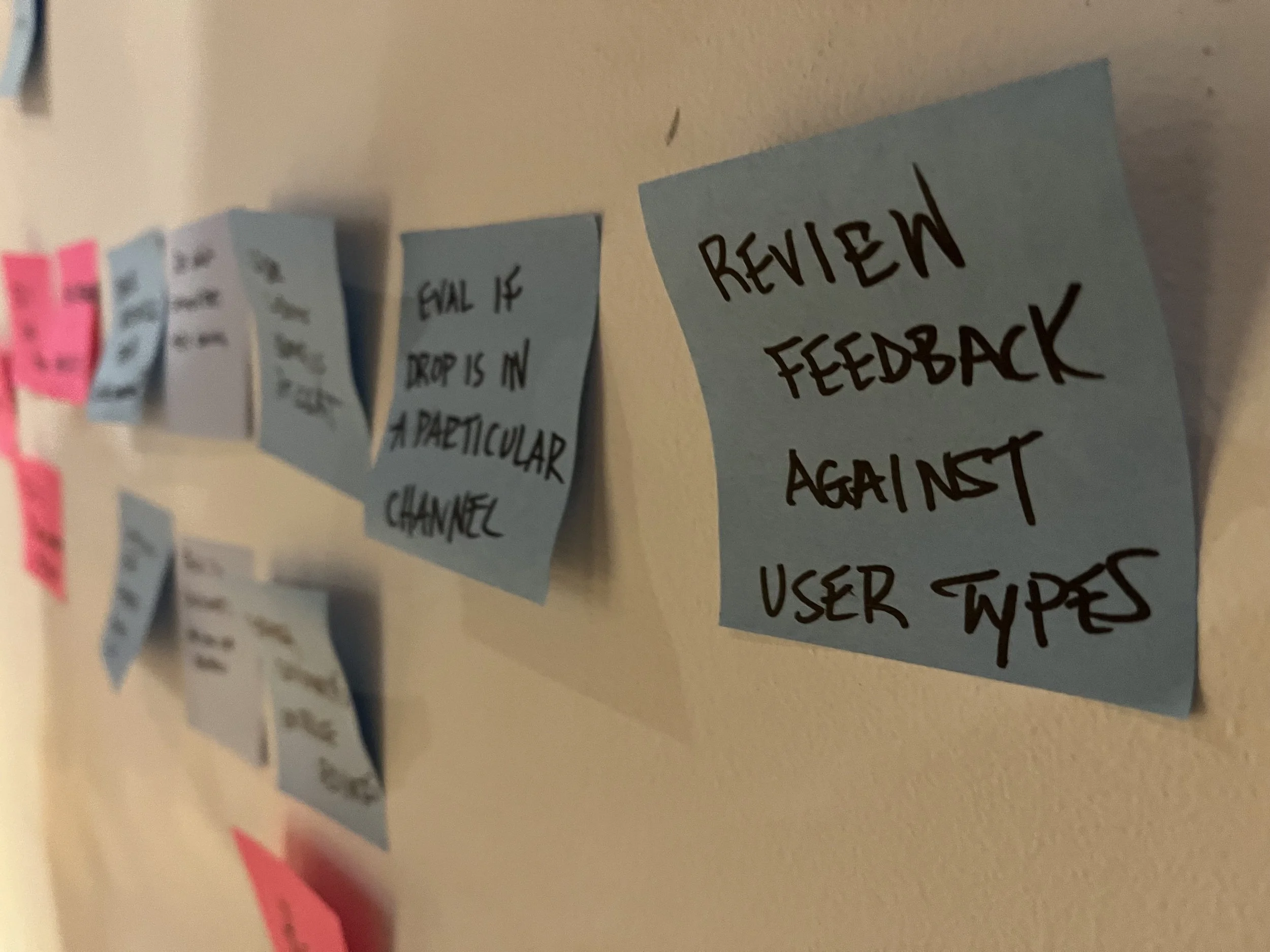
I had the great pleasure recently of being with a group of other facilitators at the SF Facilitation Lab (a network of labs created by Voltage Control) … and I got to try on the facilitation of a new protocol with them. Well, new to me … it is a version and variation of one created by Voltage Control that I was excited to try :-)
The purpose of this protocol is to use constraints to help a team move out of the idea phase and into action. We’ve all seen it - a team of people has a room full of great ideas. The walls are covered with post-its. But moving into a concrete plan can feel high stakes and teams get stuck.
This protocol allows teams to play with small bets - that they can test fast (like, test it on Monday fast). Which means the risk comes down, the play comes out, and teams are able to be freer and more creative in their solutions and ideas.
Feedback from the group was so positive that I am sharing it here for you to try on, too
“The tight constraints were way more effective than I thought they were going to be”
“It was really helpful to brainstorm as a group first before committing to a plan - I realized it felt like play”
“The stakes were so low - the bets so small - that it felt really freeing to risk something new”
== Do It On Monday (modified protocol from Voltage Control) ======
Objectives: Participants will …
Choose 1-3 specific curiosity questions that move forward a larger design challenge
Identify clear constraints (e.g. time, resources, etc)
Working within constraints, brainstorm small-bets activities that can be done “on Monday” to start to gain insight into the challenge
Create 2-3 concrete time-boxed actions, including who will do what by when (and how you will measure it)
Set Up
13 - 15 participants
Use your favorite grouping technique to break into groups of 3 for work time
Keep slides simple, no more than 4-5 slides for instructions & transitions
Space set up for large group and small group work
Materials
Large shared space (e.g. whiteboard, wall space, etc)
Post-its
Markers
~ PROTOCOL~
Welcome (2-3 min)
Review the goals of the exercise
(optional) Create a mental model for participants by sharing an analogy of where constraints help create momentum (e.g. white water rafting)
Set Challenge & Context (3 min)
Introduce the agenda
Break into small groups of 3
Select 1-3 curiosity questions raised by an emerging challenge (NOTE: you can build off a brainstorming session or give the group time to brainstorm … but in our session we gave the groups 3 pre-curated options - see below)
As a small group, they will choose a curiosity question to work on
Clear constraints will be introduced: “If we had five days, three existing resources, two colleagues, and $50, what might we realistically try starting Monday?”
Brainstorm to generate as many ideas as possible “how might we …”
Work burst to create 2-3 concrete, time-boxed actions (i.e. not big projects!)
What will you do?
Who is involved?
What will you look for or measure?
Share and sharpen. Participants will present each small bet to the group
Close with a brief debrief on what’s most promising, what assumptions are we making, and what commitments can we extend
Break Into Small Groups (1 min)
Quickly organize into groups of 3 (NOTE: facilitator privilege - use your favorite technique - just do it FAST)
Small Groups Choose Their Challenge/Question (2-3 min)
Share possible challenge/question options
Each group decides which one they would like to focus on (NOTE: keep it FAST … give them no more than 1 minute to do this)
(optional if you are not building brainstorming time into the protocol) present 3 options for teams to choose between, e.g.
Cybersecurity compliance is high, employee behavior has not changed: Why are phishing simulation click rates still elevated when we have high rates of employees completing required cybersecurity modules?
Possible small bets: Micro-learning refreshers, public “near-miss” storytelling, team-based phishing scoreboards, immediate post-click coaching experiments
Customer attrition after recent pricing change: Why do we have a 6% drop rate in customers but customer feedback mixed?
Possible small bets: Experiments around targeted retention calls, feature bundling tests, short-term loyalty offers, clearer messaging.
Compliance review cycle seems to be slowing product launches: How might we reduce friction between legal, product, and sales teams while ensuring strong compliance loops?
Possible small bets: Time-boxed pre-review checkpoints, shared intake templates, weekly cross-team standups, simplified review tiers for low-risk updates
Brainstorm (~8 min)
Groups create as many post-its as possible as they wrestle with “how might we …?” to learn more about their question within the constraints
Circulate between teams, reminding them about the design constraints as needed and if they are getting stuck
5 days
3 existing resources
2 colleagues
$50
Work Burst (~10 min)
Refocus the group and give them small groups their next set of instructions, which is to move off of brainstorming into action - key part of protocol is to commit to small bets
Create 2-3 concrete, time-boxed actions for what you might try starting on Monday (NOTE: not big projects)
WHAT will you do?
WHO will do it?
HOW will you measure it?
NOTE: encourage them to think on a human and system scale Example(s)
We could create a shared interview guide on Monday,
Use our $50 on coffee dates on Tuesday,
Talk to 3 people each from different departments,
Have an analyst pull data to compare cycle times across different product lines,
Compare notes on Wednesday to get a better sense of root causes,
And create a process map by Friday for what is going on between compliance, product, and legal
Share Out (10 min)
Each group shares out their top action
Time permitting they can share 1-3 actions
Debrief (4 min)
Close with a brief debrief on what’s most promising, what assumptions are we making, and what commitments can we extend
Calendar next steps and time blocks for the coming week